
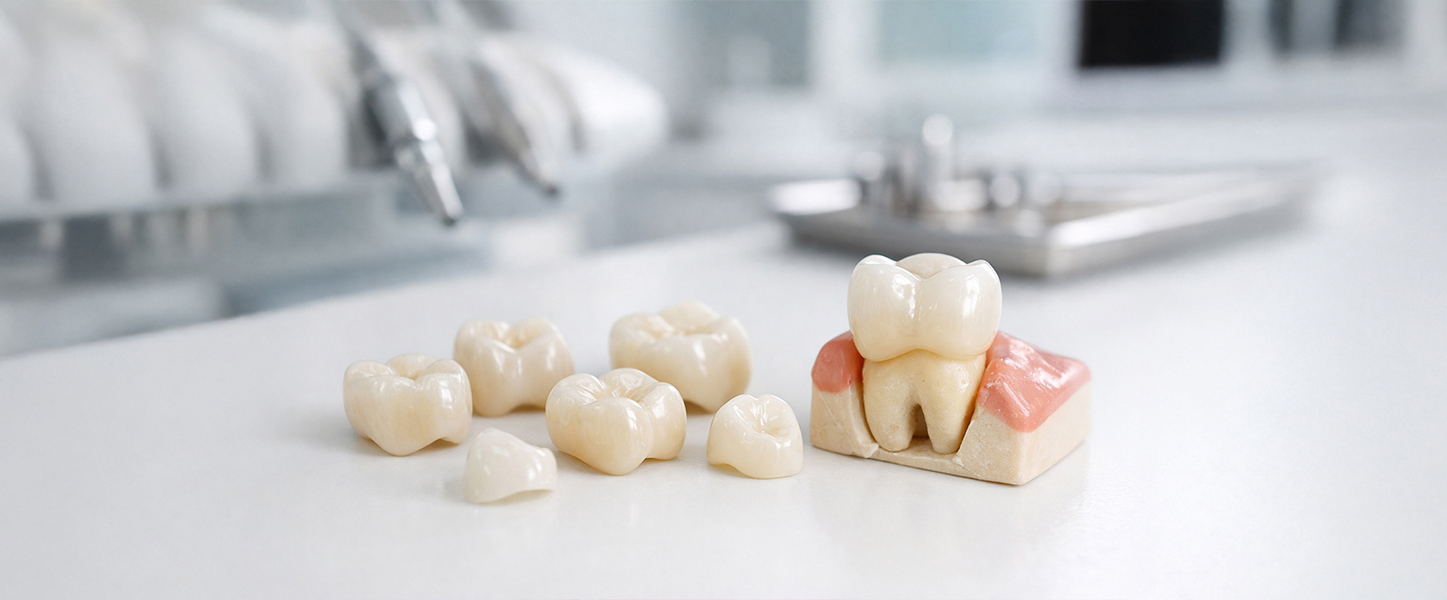
What to Expect During a Dental Crown Procedure
April 1, 2026
Introduction
When a tooth has been weakened by decay, a crack, or previous dental work, it may no longer handle normal chewing pressure. In such cases, a crown is used to protect the remaining tooth and help restore its function. Many patients ask how the tooth crown procedure is carried out and what to expect at each visit. Understanding the sequence of steps can make the process easier to follow and help you stay informed throughout treatment.
What Is a Dental Crown and Why Do You Need One?
A dental crown is a restoration placed over a tooth to strengthen it and restore its original shape. It is recommended when the remaining tooth structure cannot support normal use on its own.
A crown may be advised when:
- A large filling leaves the tooth unsupported
- A crack extends into deeper layers
- A root canal reduces internal strength
- Ongoing wear weakens the tooth over time
Many patients consider porcelain crowns in Houston, TX because they can be matched to natural tooth color while still providing the strength needed for chewing.
Initial Consultation and Examination
Before treatment begins, the dentist evaluates the tooth and surrounding structures to confirm that a crown is appropriate.
This evaluation may include:
- Checking the tooth for visible damage or decay
- Taking digital X-rays to review the root and bone
- Assessing how your teeth come together when you bite
If you are searching for a dentist near me, this step helps determine whether the tooth can be restored directly or if additional treatment is required first. In some cases, the tooth must be stabilized before a crown is placed.
Tooth Preparation: Shaping the Tooth
The next part of the Procedure for a tooth crown involves preparing the tooth so the final restoration fits properly without affecting your bite.
During this stage:
- The area is numbed using local anesthesia
- Decayed or weakened portions of the tooth are removed
- The outer surface is shaped to create space for the crown
This preparation allows the crown to align with your surrounding teeth so it does not feel raised or uneven. The dentist removes only what is necessary while preserving as much healthy structure as possible.
Taking Impressions for a Perfect Fit
Once the tooth is prepared, impressions are taken to guide the creation of the crown.
These records capture:
- The shape of the prepared tooth
- The position of nearby teeth
- How your bite comes together
A dental laboratory uses this information to fabricate a crown that fits accurately and distributes pressure evenly. Even small differences in fit can affect comfort, which is why precision at this stage matters.
Temporary Crown Placement
To protect the prepared tooth while the final crown is being made, a temporary restoration is placed.
During this period, you may notice:
- Sensitivity to temperature
- A slight difference in how your teeth meet
To help prevent the temporary crown from coming loose:
- Avoid sticky foods
- Limit chewing hard foods on that side
The temporary crown protects the tooth and helps maintain spacing until the permanent crown is ready.
Final Crown Placement
When the final crown is ready, it is placed during your next visit.
The dentist will:
- Remove the temporary crown
- Check the fit along the edges
- Evaluate how it contacts opposing teeth
- Make small adjustments if needed
- Secure the crown using dental cement
Careful adjustment helps ensure the crown feels natural and does not create uneven pressure when you bite.
Is the Dental Crown Procedure Painful?
The tooth crown procedure is performed with local anesthesia, so the area remains numb during treatment. Most patients feel pressure rather than pain while the tooth is being prepared.
After the procedure, you may notice:
- Mild soreness around the tooth
- Sensitivity when biting or with temperature changes
These symptoms usually improve as the tooth adjusts. If discomfort continues, the dentist may check your bite and make adjustments if needed.
Final Thoughts
When a tooth no longer has enough strength on its own, a dental crown provides support and helps restore normal function. The process is completed in steps to ensure the final result fits well and functions comfortably. Crowns are durable but can wear over time, so regular dental visits are important to monitor their condition.
Schedule Your Consultation
If you are considering a dental crown and want a clear, step-by-step understanding of your treatment, schedule a consultation with Houstonian Dental in Houston, TX to review your options and next steps.